

The past few years have turned spare bedrooms, basements, and even dining rooms into full-time offices. When you’re in that space eight hours a day, the floor under your chair matters a lot more than it used to. Comfort, noise, rolling chairs, and video-call backdrops all tie back to one decision: what you put on the floor.
Below, we’ll walk through practical options for home-office flooring, how they feel and sound, and what to consider before installation so your workspace works as hard as you do.
What Your Home Office Floor Really Needs To Do
A good-looking surface is only part of the story. In a remote workspace, flooring has to balance several jobs at once.
You want a surface that feels comfortable underfoot during long days, but also stands up to rolling chairs and the occasional coffee spill. Noise is another big factor; hard surfaces can echo, while softer ones help tame sound during calls. If you’re planning a renovation that includes new surfaces in other rooms, it can help to look at your project as a whole and review our full list of flooring services to understand how different materials might work together.
Key idea: Start by listing how you actually use the room—hours per day, pets, kids, equipment—then match the surface to that reality instead of the other way around.
Quiet and Comfortable: Carpet for Dedicated Offices
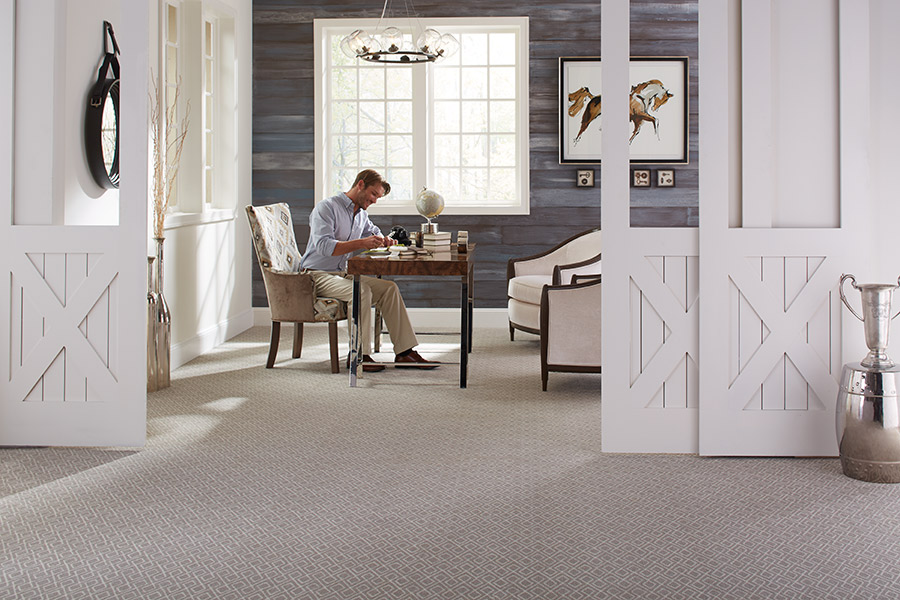
For a fully enclosed office where you can close the door, carpet is tough to beat for comfort and acoustics. It softens echo, keeps footsteps quiet, and cushions standing desks or anti-fatigue mats.
Low-pile or loop styles are usually best for work areas because they’re easier to roll across with an office chair and they trap less dust than deep plush constructions. If you’re planning to replace an existing surface with broadloom or carpet tile, it helps to understand what happens on installation day. Our carpet installation prep guide explains how to handle furniture, old materials, and door clearances so the process goes smoothly.
Best fit: Dedicated rooms, upstairs offices where noise travels, and households that value a soft, warm feel underfoot.
Durable and Easy to Clean: Luxury Vinyl, Laminate, and Hardwood
In multi-purpose spaces—like a corner of the living room or a finished basement—you may want a more versatile surface that still looks polished on camera.
Luxury vinyl plank is popular for home offices because it combines a realistic wood look with excellent dent and spill resistance. Once you know this type of material fits your lifestyle, our luxury vinyl plank catalog makes it easy to compare colors and styles that will complement the rest of your home.
Laminate can also work well under rolling chairs when paired with the right underlayment. It offers a firm feel and strong scratch resistance at a friendly price point. If you’re leaning in this direction, our laminate installation guide outlines how to prepare the space and what to expect during the project so you can plan your work schedule around it.
Site-finished or engineered hardwood brings a classic look that transitions beautifully into adjacent rooms. Because it’s a long-term investment, understanding how installers handle existing surfaces, baseboards, and door adjustments is important; the hardwood installation guide walks through those details so there are fewer surprises.
Best fit: Open-concept layouts, basement offices, and spaces where your “office” shares sightlines with main living areas.
Planning Your Project Around Real Life
Once you’ve narrowed down a material, timing and logistics become the next big questions. Most families need to keep working while projects are underway, so it helps to think through where you’ll set up a temporary workspace, how long you can be without the room, and whether you’ll need help moving heavy furniture.
If you like to see options side by side before committing, visiting our Windsor or Cheyenne showroom lets you compare how different finishes look under real lighting and talk through installation timelines with our team. Many homeowners also coordinate flooring with other updates—paint, trim, or built-ins—so planning everything together can save time and disruption.
Bottom line: A little preparation up front keeps your work life running smoothly while the room transforms.
Ready to Upgrade Your Home Office Floor?
The right surface can make your remote workspace quieter, more comfortable, and far more professional—without sacrificing durability. When you’re ready to talk through options, measurements, and timelines, you can request a free estimate and we’ll help you plan a project that fits both your space and the way you work.


