About Glass Tile: A Windsor & Cheyenne Buyer's Guide
Few materials change a room as fast as glass tile. Light hits it and scatters, so a narrow galley kitchen feels wider and a windowless powder room feels awake. Because the color is fired into the glass or painted on the back, it stays true for the life of the wall — no fading, no yellowing, no staining. You can see the full range in our glass tile catalog, from clean subway shapes to mesh-mounted mosaic sheets, and if a project is already taking shape you can book a free estimate to talk it through with a designer.
Glass tile is a finish material more than a flooring material. Its home is the wall — kitchen backsplashes, shower surrounds, bathroom accents, fireplace faces, and the feature walls that catch your eye the moment you walk in. Knowing where it shines, how it compares to ceramic and stone, and what proper installation takes will help you put your budget where it pays off.
What Glass Tile Is and How It's Made
Glass tile is exactly what it sounds like: tile made from silica glass, colored and kiln-fired into small, uniform pieces. Some is cast from recycled bottles and windows, some is cut from sheets of float glass, and the richest is fused in layers for depth. The color comes from one of two places — pigments mixed into the glass itself, or a coating painted onto the back of a clear tile, which is what lets a back-painted white read so crisp and bright.
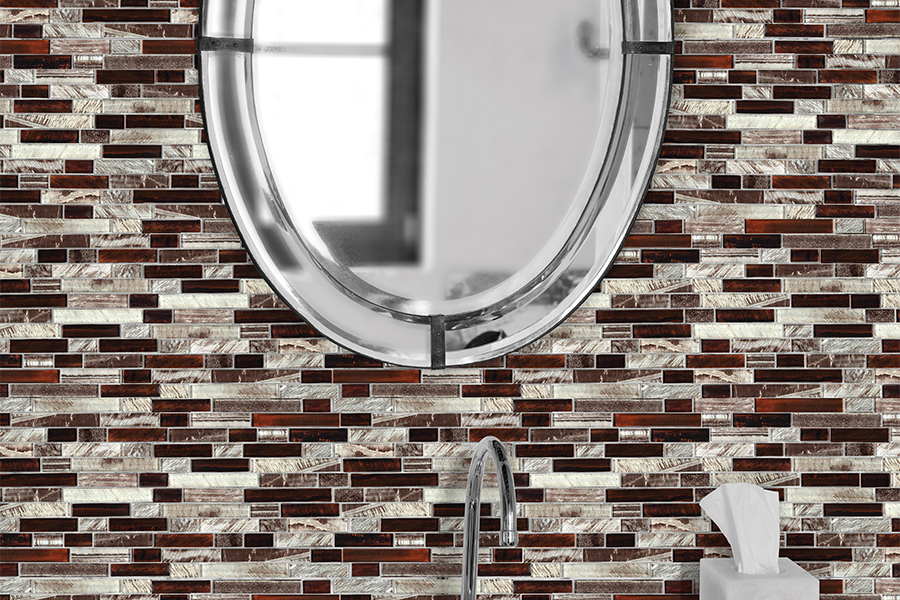
Most glass tile arrives in one of a few formats. Mosaic sheets — small squares, pennies, hexagons, or thin linear strips held on a mesh or paper backing — let an installer set dozens of pieces at once in a straight, even field. Larger field tiles and glass subway shapes go up piece by piece like any wall tile. Finishes run from high-gloss and mirror-bright to soft matte, frosted, and iridescent, where the surface shifts color as you move past it.
Request an estimate
Why Glass Tile Suits Northern Colorado Homes
Two things about life along the Front Range make glass tile a smart pick. The first is the sun. At this altitude the light is intense and the region stays bright most of the year, and strong UV fades a lot of materials over time — but not glass, whose color is locked in during manufacturing. A glass backsplash under a sunny Windsor kitchen window will look the same years from now as it does the day it goes up. The second is moisture where it counts. Glass does not absorb water at all, so it shrugs off the steam and splashes of a shower or a busy sink, even as our dry winter air pulls moisture out of everything around it.
That combination makes glass a natural fit for the rooms Front Range homeowners remodel most: kitchens and baths. If you are rethinking one of those spaces, our kitchen and bath team can help you fit a glass backsplash or accent into the larger design, from the cabinets and countertops down to the trim.
Where Glass Tile Belongs — and Where It Doesn't
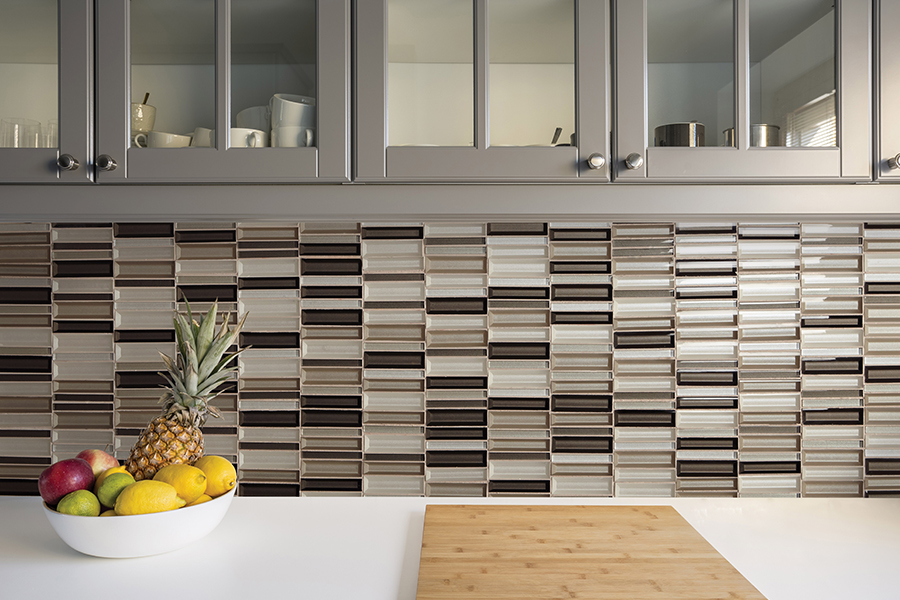
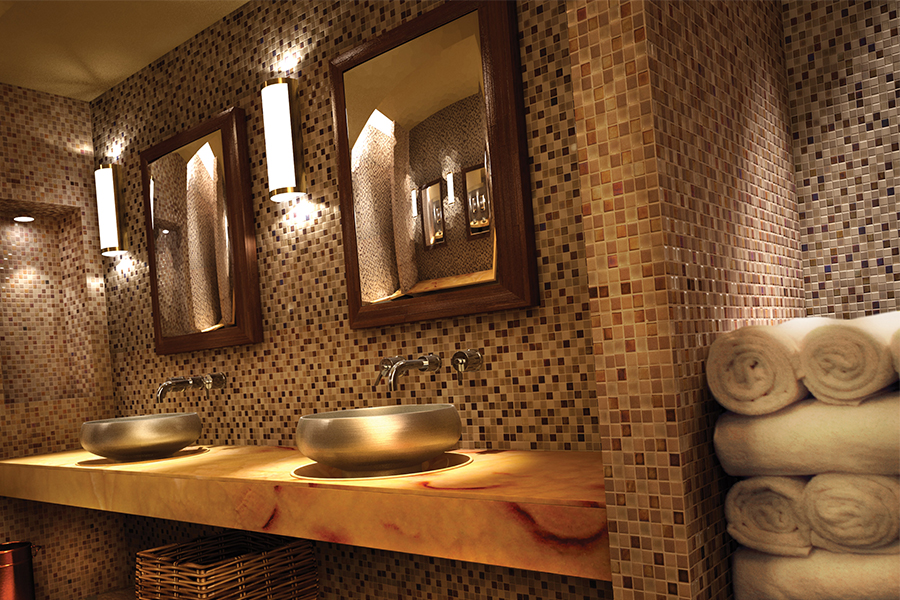
Glass tile is at its best on vertical surfaces and in small, high-impact doses. The classic use is a kitchen backsplash, where it wipes clean of grease and tomato sauce with a damp cloth. It is just as at home on shower walls and tub surrounds, in a bathroom accent band, across a fireplace face, or lining a shower niche in a color that pops against the surrounding tile. A single feature wall of glass mosaic can carry a whole room.
The one place to think twice is the floor. Most glass is polished enough to be slick underfoot, and while it is hard, a heavy dropped pan is more likely to chip a glass floor than a porcelain one. For floors you are better served by the porcelain and ceramic in our full tile collection, with glass earning its keep on the walls above. If you love the idea of glass underfoot, small matte or textured glass mosaics rated for light residential floors do exist — a designer can steer you to the ones that qualify.
Reading Your Glass Tile Options Like a Pro
A handful of terms show up on every glass sample, and knowing them makes the showroom easier to navigate. Clear, or cast, glass is colored all the way through; back-painted glass is a clear tile with color applied behind it, which gives you the widest, cleanest color range. Transparency matters more than it first seems: because you can see into glass, whatever sits behind it — the thinset, the mesh, even the wall — quietly affects the final color. That is why installers use bright white thinset under glass, and why a sample held up at home can read differently than one under showroom lights.
Format and finish do the rest of the work. Mosaic sheets speed up installation and bend easily around curves and niches; subway and larger field tiles give a cleaner, more modern grid. Glossy finishes throw the most light and read crisp and contemporary; frosted and matte finishes are quieter and hide water spots better; iridescent finishes add a shifting, jewel-like depth that suits a feature wall more than a whole room. There is no single right answer — only the one that fits your light and your style.
One more habit worth building before you commit: judge your color under the light it will actually live in. Glass reflects and transmits light, so the same tile can read cool and gray under a north-facing window and warm and golden under afternoon sun. Bring a sample home, tape it to the wall, and look at it morning and evening. An online room visualizer on each product page can help you preview a look first, but the final call is always easier with a real tile in the real room.
Glass Tile vs. Ceramic, Porcelain, and Stone
Glass earns its price in color, light, and cleanability, and it gives ground underfoot and on big, square-footage jobs. Set against ceramic and porcelain, glass wins on brilliance and on never needing to be sealed, while porcelain wins on floors and on covering large areas affordably. That is exactly why so many kitchens pair a hard-wearing porcelain or ceramic floor with a glass backsplash above.
Against natural stone, the trade is character for upkeep. Marble and travertine mosaics bring a depth and veining glass cannot copy, but stone is porous and needs periodic sealing to fend off stains, where glass handles moisture with no sealing ever. Plenty of backsplashes split the difference — a stone-and-glass blend from our natural stone selection gives you the warmth of stone with sparks of glass catching the light.
Design Ideas and Patterns for Glass Tile
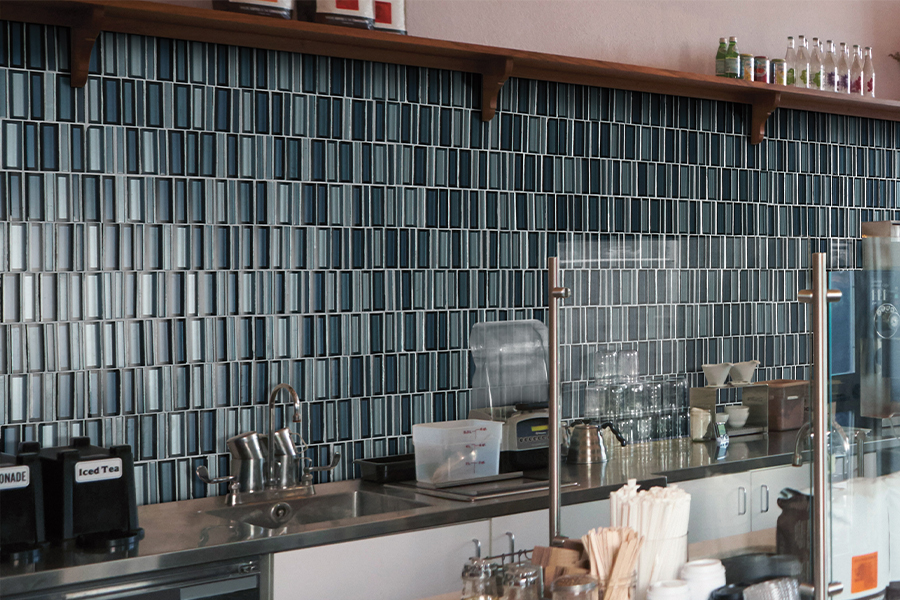
The layout you choose changes a glass backsplash as much as the color does. A running-bond subway pattern reads classic and calm; a vertical stack looks crisp and draws the eye upward; herringbone and chevron add movement and a custom, high-end feel. Our look at tile patterns beyond the standard grid shows how each layout reshapes a room, and every one of them translates to glass.
Grout color is the quiet decision that makes or breaks the look. A matching grout lets a mosaic read as a single shimmering field, while a contrasting grout turns the same tile into a crisp graphic pattern. With glass, many homeowners lean toward a grout close to the tile's own tone so the light, not the grid, is the first thing you notice.
Glass rarely works alone. The most successful backsplashes pick up a color already in the room — a vein in the countertop, the finish on the cabinet hardware, a wall paint — so the tile reads as intentional rather than added on. This is where a second set of eyes earns its keep, and where our complimentary design service can gather the tile, counter, and cabinet samples in one place and save you from a mismatch you only notice after it is on the wall.
Installing Glass Tile the Right Way
Glass is one of the least forgiving tiles to set, which is exactly why it pays to have it done by professionals. Because glass is transparent, any unevenness in the thinset or a stray trowel line shows straight through the finished surface, so the setting bed has to be flat and combed with care. Cutting glass without chipping the edges takes a wet saw and the right blade, and mosaic sheets have to be aligned so the grout lines run true from one sheet to the next. Small mistakes that would hide behind ceramic are on full display behind glass.
Our tile installation crews handle those details as a matter of course — flat substrate prep, white thinset under glass, clean cuts, and even grout joints — and our in-house installers work to each manufacturer's specifications so your warranty stays intact. If you are weighing a do-it-yourself backsplash, it is worth reading why professional tile installation is worth the investment first: a backsplash is a small area where a clean result is very visible and a rough one is impossible to ignore.
Caring for Glass Tile
Few surfaces ask less of you than glass tile. It is non-porous, so it never needs sealing and it will not soak up stains, mold, or odors. Day to day, a wipe with a soft cloth and a mild, non-abrasive cleaner keeps it bright — just skip anything gritty or strongly acidic that could scratch or dull the finish. The grout between the tiles is the only part that asks for attention; keeping it clean, and choosing a stain-resistant or epoxy grout up front, is what keeps a glass backsplash looking new for years.
What Glass Tile Costs
Per square foot, glass usually costs more than basic ceramic, but the areas where you use it — a backsplash, a niche, an accent band — are small, so the total often lands lower than people expect. What moves the number is the material itself (recycled versus fused, standard versus specialty finishes), how intricate the pattern is, and how much wall you are covering. Labor is a real part of the picture too, since glass is slower and more exacting to set than standard tile.
The honest way to know your number is to have it measured. We offer financing that lets you spread a kitchen or bath project over time, and a no-cost, measured estimate puts real square footage and a real layout behind the price instead of a guess.

See Glass Tile in Person
Glass changes with the light, which is the one reason a sample beats a screen every time. You are welcome to compare glass tile at our Windsor and Cheyenne showrooms, where you can hold a mosaic sheet up to the light and set it beside the countertop or cabinet it will live next to. Reading through our customer reviews is a good way to get a feel for how projects go from first visit to finished wall.
When you are ready, request a free estimate and one of our project specialists will help you turn a wall you walk past every day into the best-looking surface in the house.
Request an estimateGlass Tile FAQs
No. Glass is non-porous, so unlike natural stone it never needs sealing to resist water or stains. The only part of a glass installation that benefits from care is the grout, which you can keep sealed or choose in an epoxy formula that resists staining on its own.
In most cases it is better kept on the walls. Polished glass can be slippery and chips more easily underfoot than porcelain, so it is not the usual choice for a main floor. Some matte or textured glass mosaics are rated for light residential floor use, like a small bathroom floor or a decorative inlay — a designer can point you to the ones that carry the right rating.
On walls, very. Glass is hard, scratch-resistant in normal use, and completely unbothered by moisture, which is why it holds up so well in showers and behind sinks. Its color never fades, even in direct sun. The main thing to guard against is a sharp, hard impact, which is far more likely on a floor than on a backsplash or shower wall.
Just the opposite. A smooth, non-porous surface wipes clean of grease, soap, and hard-water spots with a soft cloth and a mild cleaner. Glossy glass shows fingerprints and spots a little more than matte does, so a frosted or matte finish is worth considering behind a heavily used range or sink.
Glass is brighter, bounces more light, and never needs sealing, but it costs more and is not meant for floors. Porcelain and ceramic cover large areas and floors affordably and come in endless looks of their own. Many kitchens use both: a durable tile floor and a glass backsplash above it.
Kitchens and bathrooms are the heartland — backsplashes, shower surrounds, tub walls, niches, and accent bands. Beyond those, glass makes a striking fireplace surround or entryway feature wall. Anywhere you want light, color, and easy cleanup on a vertical surface is fair game.
Reimagine your space
Get inspired with our beautiful flooring galleries