

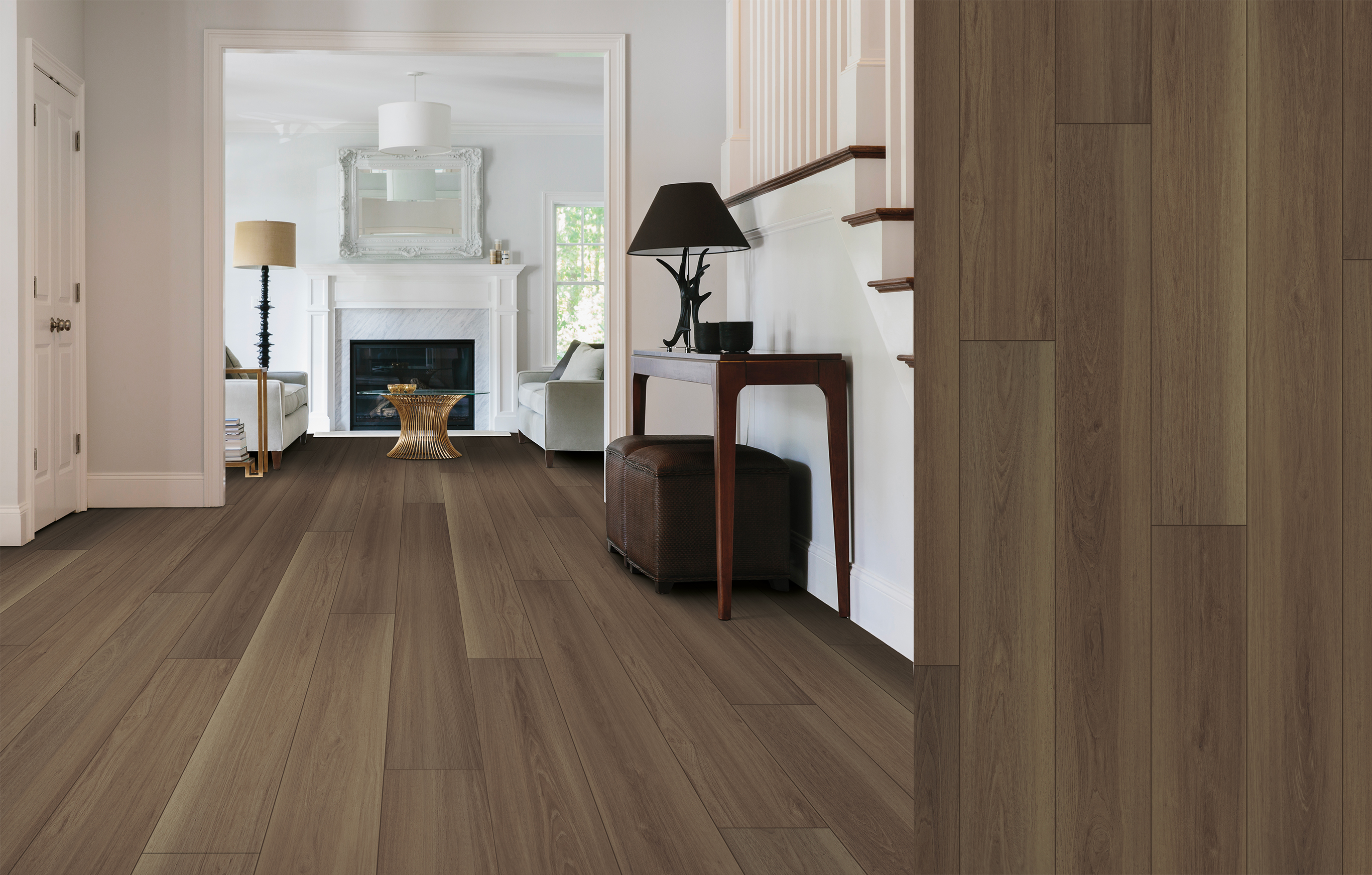
You’ve decided on luxury vinyl plank for part of your home, but you’re keeping your existing hardwood or tile in other rooms. Now the big question hits: how do you make everything look intentional instead of pieced together over the years? The good news is that with a bit of planning around color, pattern, and transitions, mixed surfaces can feel like one cohesive design.
Start With the Wood You Already Have
When you’re pairing new planks with existing hardwood, the floor that’s staying should drive your decisions. Instead of hunting for a perfect match (which is nearly impossible), focus on relationship: undertone, depth, and character.
Look at your current boards in natural daylight. Are they warm (golden, honey, red), cool (gray, taupe), or neutral? Choose vinyl with a similar undertone, even if the grain pattern is different. A warm oak next to a cool gray plank will always feel disjointed, but two warm tones—one lighter, one darker—can look layered and intentional.
Next, consider contrast. If your original boards are a mid-tone brown, an LVP that’s just a shade lighter or darker can look “almost but not quite,” which reads as a mismatch. Instead, go clearly lighter or distinctly deeper so it looks like a deliberate design choice. Once you’ve narrowed the look, browsing a focused luxury vinyl plank selection makes it easier to compare undertones and grain side by side.
Make Tile and LVP Work Together, Not Compete
Tile often has more visual activity than vinyl planks, so coordination is about balance. If your existing tile has strong veining, heavy pattern, or multiple colors, keep the new boards quieter: minimal knots, subtle grain, and a more even color. If the tile is simple and solid, you can let the plank bring in more texture.
Color temperature matters here too. A creamy beige tile pairs best with warm browns or honey tones. Cool porcelain in gray or greige prefers vinyl in the same family. When in doubt, match the tile’s background color, not the darkest accent in the pattern. That background is what your eye reads across the whole floor.
Think about sheen as well. Many tiles have a slight gloss, while most vinyl is matte. That difference can be beautiful if it feels intentional. Keeping both surfaces in similar color families, while allowing the finish to vary, gives your home subtle dimension instead of visual noise. If you’re coordinating multiple surfaces in a kitchen or bath, our designers can also help align floors with cabinets and counters through our kitchen and bath design services.
Get Transitions Right: Height, Shape, and Safety
Even the best color match can be ruined by an awkward threshold. A clean, safe transition is what makes two materials feel like they belong in the same home.
First, check height. If tile and vinyl sit nearly level, a low-profile T-molding can create a slim, unobtrusive line between them. When there’s a noticeable difference, a reducer helps ease from the taller surface down to the thinner one so you don’t create a tripping edge. Between hardwood and LVP, a coordinating wood or vinyl transition strip, stained or selected to echo one of the floors, keeps the break from feeling random.
Expansion needs matter too. Floating vinyl needs room to move, while tile and nail-down wood are rigid. Leave the proper gap under the molding so the planks can expand and contract without buckling. Our in-house crews follow manufacturer guidelines carefully, and resources like our tile installation checklist show how much prep goes into getting these details right.
Plan Installation So Mixed Floors Age Gracefully
When you’re blending surfaces, layout and flow matter just as much as product choice. Think through how you move from room to room. Long runs of plank should ideally follow the main sightline so boards lead you naturally through the space, while transitions land in logical places: doorways, cased openings, or clear breaks between zones.
It also helps to coordinate all work at once instead of tackling rooms years apart. That way, you can choose trims, stair noses, and thresholds that tie everything together from the start. If you want an overview of how different materials are handled under one roof, our full list of flooring services outlines the range of installation and design support we provide.
Finally, remember that homes in Northern Colorado and Southern Wyoming see big swings in temperature and humidity. Acclimating materials correctly and following a solid prep checklist keeps transitions tight and surfaces stable over time; our hardwood installation guide is a good example of the kind of planning that goes into a long-lasting result.
Ready to Tie It All Together?
Mixing luxury vinyl plank with existing wood and tile doesn’t have to feel like a compromise. With the right color relationships, thoughtful transitions, and careful installation, you can respect what you already love while updating the rest of your home. When you’re ready to talk through options and get accurate numbers, you can request a free estimate and we’ll help you plan a cohesive look from room to room.


