

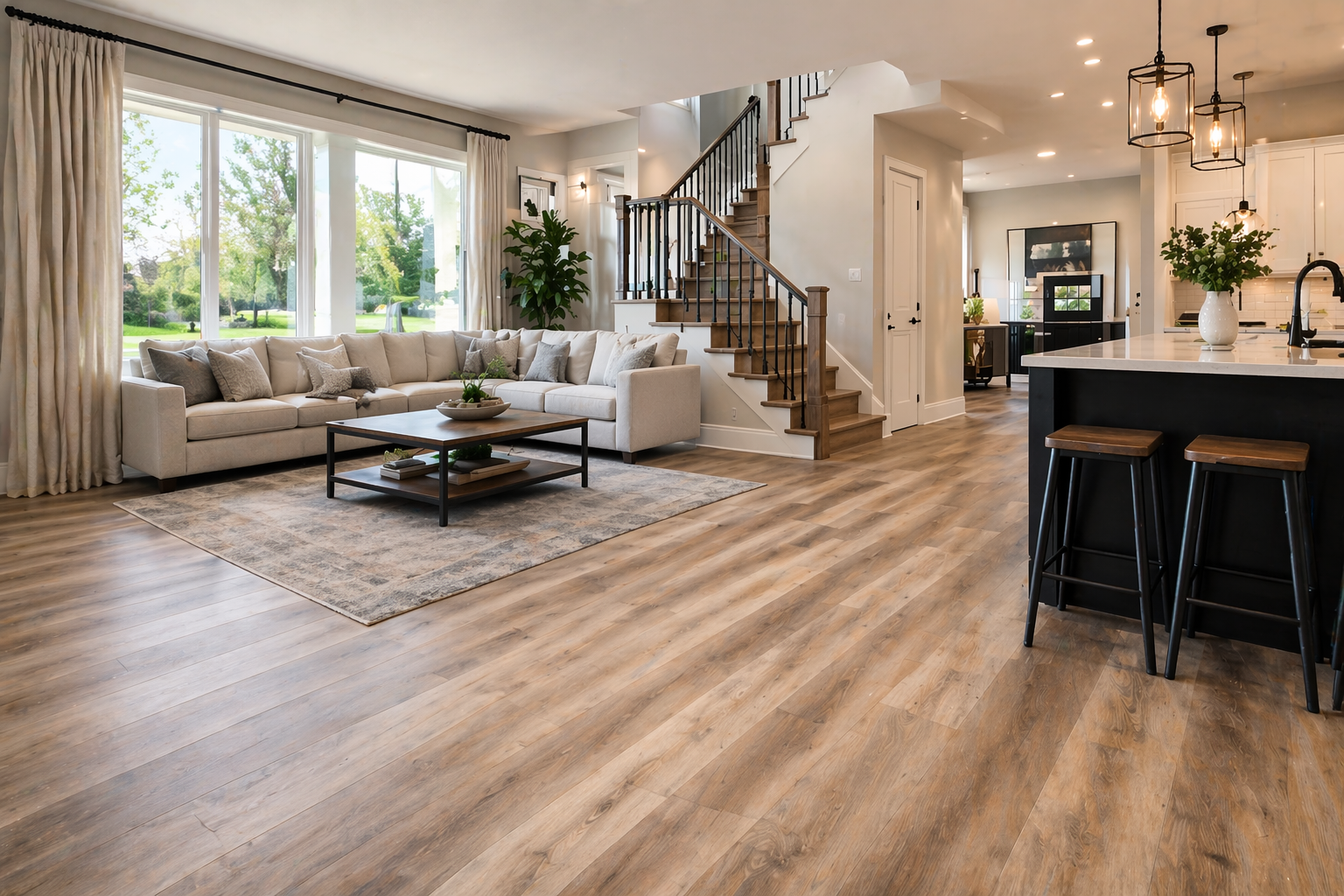
A whole-home flooring update usually starts with a simple goal: make the house feel more finished, more comfortable, and more consistent from room to room. Then the questions pile up. Should every space get the same material? What deserves the biggest share of the budget? And how do you avoid spending too much early, only to compromise later? A smart plan starts with understanding where your money goes before you choose a single color or plank.
Start with layout, not just materials
The biggest budgeting mistake is treating every room the same. A guest bedroom, a busy entry, and a kitchen do not ask the same things from a surface, so they should not automatically receive the same investment. High-traffic areas usually deserve the most durable options and the most careful prep, while low-use spaces may give you more flexibility on price.
It also helps to think in zones. Main living areas often need visual continuity, but bathrooms, laundry rooms, and bedrooms can be budgeted differently without making the house feel disjointed. If you're still weighing how different materials will be installed in different spaces, the preparation details in the hardwood installation guide and the tile installation guide can help you understand how room conditions affect cost.
Build your budget around the full project scope
Material is only one line item. A realistic number should also include demolition, subfloor repair, furniture moving, transitions between rooms, trim adjustments, and waste from cuts or pattern matching. Those supporting costs are where many projects drift off course, especially in older homes where the subfloor may need more attention than expected.
Installation method matters too. Glue-down, floating, and mortar-set systems each come with different labor demands, and those differences affect the total just as much as product selection. Before setting a firm number, review the full list of flooring services so you can see how a whole-home project often involves more than one category of work. A budget is more accurate when it accounts for process, not just product.
Choose where to save and where to spend
Not every cost should be minimized. In most homes, it makes sense to spend more on the areas that absorb daily wear and save in rooms that see lighter use. That could mean investing in a tougher core construction for the main path through the house while choosing a softer, simpler finish elsewhere.
This is one reason many homeowners compare resilient products for broad-use spaces. When you want a balance of durability, design flexibility, and easier maintenance, browsing a luxury vinyl plank catalog can help you see how style and price range move together. In places like Windsor or Cheyenne, that practical mix often appeals to households that want good performance without committing every room to the same premium material.
Leave room for the decisions that happen late
Even well-planned projects have last-minute adjustments. You may discover that stair details need special treatment, that a doorway transition looks better in a different material, or that one room should be postponed to keep the overall investment comfortable. That is why a contingency line matters. Even 5 to 10 percent set aside for surprises can protect the rest of your plan.
Timing also affects cost. If you are updating before a move-in, the work is often simpler than trying to phase the job around a lived-in home. In Northern Colorado and Southern Wyoming, scheduling and product lead times can shift throughout the year, so clarity early on helps keep expectations realistic.
A whole-home flooring budget works best when it reflects how you actually live: where traffic is heaviest, where durability matters most, and where design continuity will have the biggest impact. If you're ready to turn rough numbers into a clear project plan, request a free estimate and get guidance tailored to your home.


