

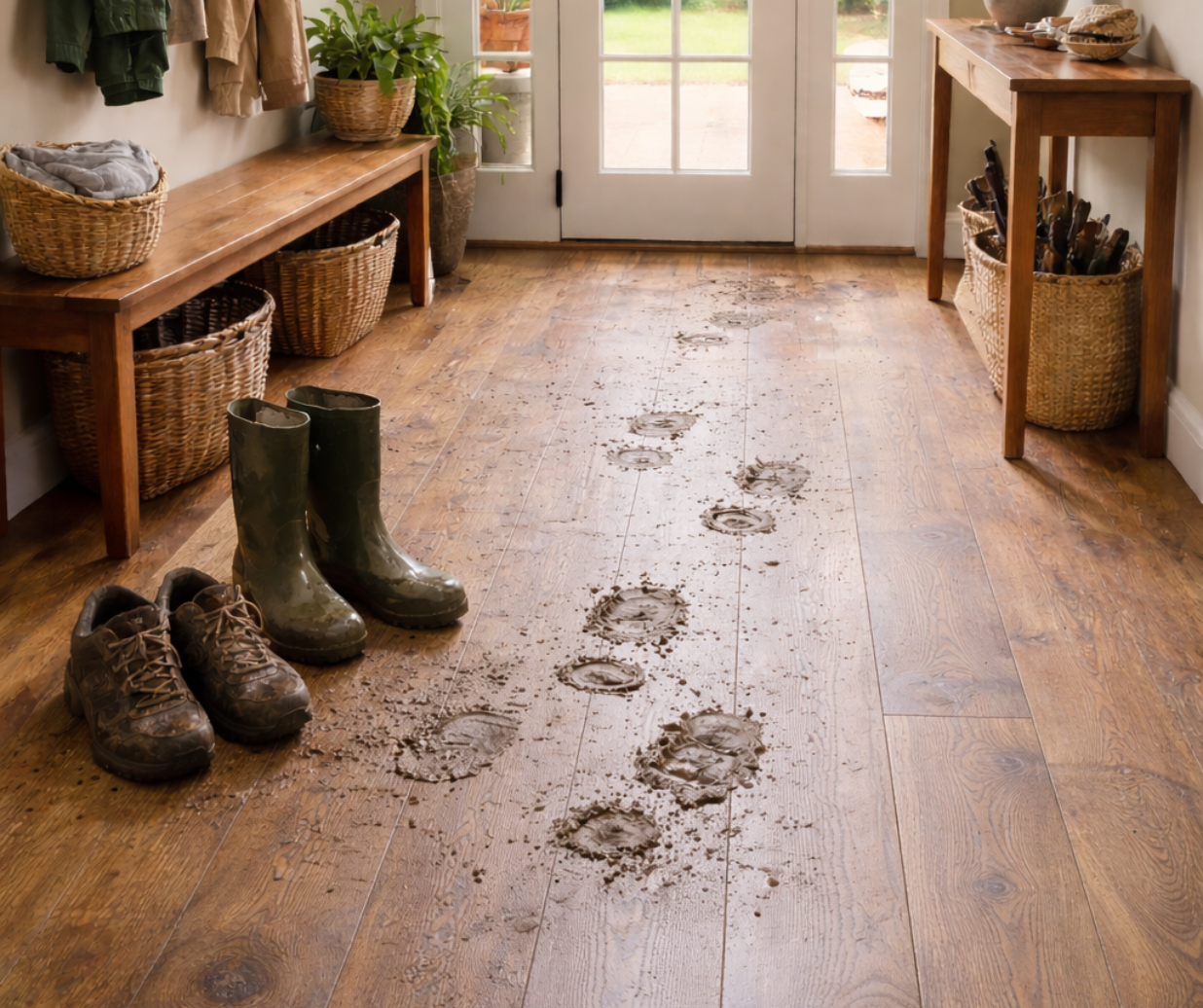
Winter and spring storms are hard on floors. You can have beautiful new planks or plush carpet installed on Friday and by Monday they’re already seeing snowmelt, road salt, and sandy grit. The good news: with a little planning, you can keep that “just-installed” look far longer, even in a four-season climate.
Start at the Door: Stop the Mess Before It Spreads
The most effective floor protection happens before anyone takes a full step inside. Think in layers around every exterior entry.
Outside, a textured scraper mat helps knock off packed snow, gravel, and salt. Inside, a second, more absorbent mat grabs the remaining moisture. Together, they dramatically cut down on what reaches your main living areas. For hard surfaces, a low-profile indoor mat with a rubber backing keeps water from seeping underneath; on carpet, make sure the backing won’t stain or stick.
Designate a “landing zone” just inside your door with a boot tray or washable rug. Encourage family and guests to remove wet shoes there instead of tracking them across the house. If you’re planning new floors and want to understand how installers will work around entryways and door clearances, our hardwood installation guide explains how we prep those high-traffic thresholds.
Match Your Cleaning Routine to Your Flooring
Snow and mud are messy, but it’s usually the fine grit that does the real damage over time. Sand and small stones act like sandpaper underfoot, dulling finishes and fraying fibers if they’re not removed quickly.
For wood, laminate, and vinyl, a soft broom or microfiber dust mop used daily in winter goes a long way. Vacuum hard floors on a hard-surface setting weekly to pull up what sweeping leaves behind. Then use a lightly dampened mop with a cleaner approved for your specific material—too much water can swell wood and seep into seams.
Carpet needs frequent vacuuming when roads are slushy. Focus on entry paths and hallways where grit settles deep in the pile. If you’re getting ready for a new soft surface and want to see how to prepare the room ahead of time, our carpet installation prep guide walks through what to move, clean, and check before the crew arrives.
Tile is more tolerant of moisture, but grout can stain and sand can scratch certain glazes. Quick sweeping and prompt wipe-ups keep joints from darkening. If you’re curious how tile crews handle demolition, furniture, and cleanup, our tile installation checklist outlines what to expect before and after the work.
Protect High‑Traffic Paths and Sensitive Rooms
Even the most durable material benefits from targeted protection where traffic is heaviest. Think garage entries, mudrooms, hallways, and the path from the front door to the kitchen.
Use runners or area rugs in straight “channels” where people naturally walk. Look for non-slip pads underneath to prevent shifting and to add a cushion layer between grit and your finish. In homes with pets, choose low-pile rugs that are easy to shake out or toss in the washer after a storm.
If you have or are considering laminate in busy spaces, it handles daily wear well but still dislikes pooled water at seams. A thoughtful maintenance routine plus smart placement of mats will help your investment last; if laminate is on your shortlist, our laminate installation guide explains how we plan layouts in those busy zones.
Set House Rules That Actually Stick
Products and mats help, but habits matter just as much. A few consistent rules make a big difference in a Northern Colorado or Southern Wyoming winter.
- Shoes off at the door and onto a tray or mat, not straight onto finished flooring.
- Towels or an extra mat ready on storm days to catch larger puddles from boots and pet paws.
- A quick end-of-day sweep or vacuum in entry areas so grit never has time to grind in.
Share these expectations with guests kindly but clearly—small changes in routine add up to years of extra life for your floors. The goal isn’t perfection; it’s reducing the daily wear your surfaces have to endure.
Ready to Plan Floors Built for Real Winters?
Thoughtful protection keeps new surfaces looking great, but choosing the right materials and installation approach at the start matters just as much. When you’re ready to talk through options, timelines, and how we handle installation details around messy seasons, you can request a free estimate and we’ll help you design a floor that stands up to snow, mud, and everyday life.


