

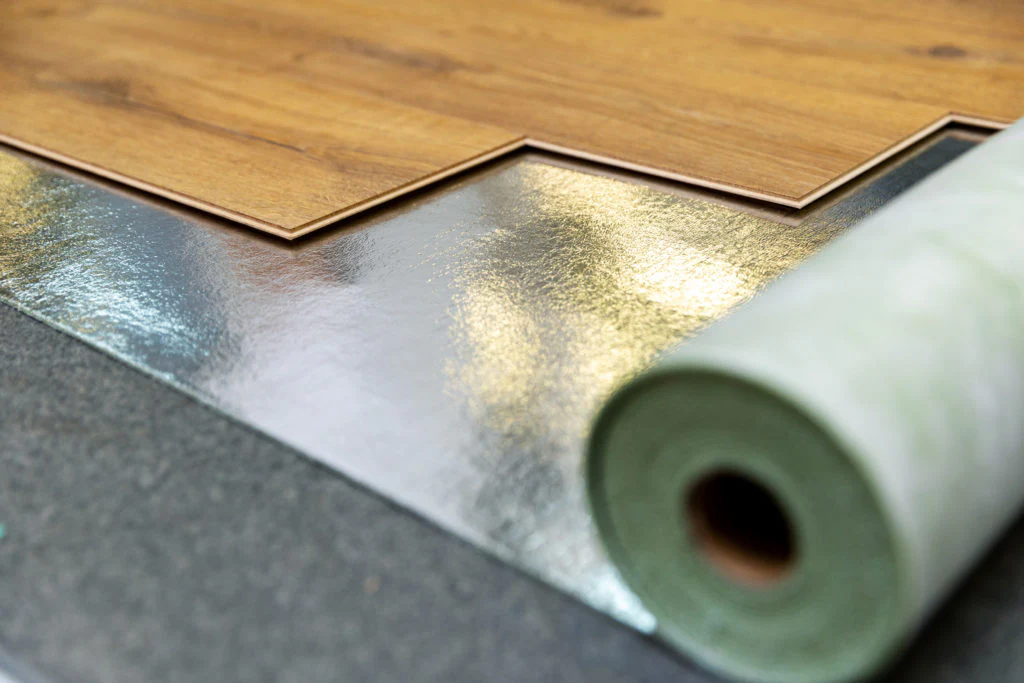
Picture this: your new floors look perfect, but every step echoes, the room feels chilly, and a faint musty smell appears after a wet week. Often, the issue isn’t the surface you see — it’s the layer underneath. That thin, hidden material called underlayment does a lot of heavy lifting for sound, comfort, and moisture control.
What Underlayment Actually Does
Underlayment is a layer between your subfloor (plywood or concrete) and the finished surface. It isn’t there just to “check a box” for installation. Used correctly, it helps:
- Absorb sound so footsteps, pets, and dropped toys don’t echo through the house.
- Soften the feel underfoot, especially with harder surfaces.
- Handle minor subfloor imperfections so your flooring lays flatter and lasts longer.
- Manage moisture and vapor, particularly over concrete or on lower levels.
Different materials—foam, cork, rubber, felt, or combination products—are chosen based on the room, the subfloor, and the type of flooring going on top. When our in-house installers plan a project, they look at all three before deciding what belongs underneath.
Sound Control: Quieter Rooms, Happier Neighbors
If you’ve ever lived below someone with hard floors, you know how much a proper underlayment matters. Footfall noise travels through the floor structure; the right layer interrupts that vibration.
Luxury vinyl plank (LVP), laminate, and some engineered products can be paired with acoustic underlayments that:
- Reduce impact sound (footsteps, dropped objects)
- Dampen airborne noise (voices, TV, music) between levels
Many modern rigid-core planks include an attached pad, but that doesn’t mean every product performs the same. Once you narrow in on LVP as your surface, our luxury vinyl plank selection lets you compare options with built-in sound pads versus styles that need a separate layer.
For multi-story homes or condos, we often coordinate with building requirements that specify minimum sound ratings, then match materials so your floor meets those standards without feeling spongy.
Comfort and Stability Underfoot
Underlayment also changes how a floor feels day to day. A thin, dense pad can make a floating floor feel more forgiving without compromising stability. Too much cushion, though, can cause joints to flex, gaps to appear, or locking systems to fail over time.
That balance is why manufacturer guidelines matter. With hardwood, for example, the underlayment choice ties directly to the installation method—nail-down, glue-down, or floating. If you’re preparing for a wood project, our hardwood installation guide explains how subfloor prep and clearances affect the finished result, including what needs to happen before any pad or plank goes in.
Laminate has its own rules as well. It typically needs a specific type of foam or combo underlayment for both comfort and joint protection. Our laminate installation guidance outlines how the crew will approach prep, so you know what’s happening beneath the boards you’ll walk on every day.
Moisture and Concrete: Where Underlayment Really Matters
Moisture is where a good underlayment can save you from costly problems. Concrete slabs constantly release water vapor; basements and slab-on-grade spaces are especially vulnerable. Without the right barrier or moisture-rated system, you may see:
- Cupped or warped planks
- Mold or mildew odors
- Adhesive failure on glue-down installations
Not every product wants the same solution. Some LVP and laminate systems are designed to float over a vapor barrier underlayment, while others require a separate moisture test and specific adhesives. Our crews are trained to manufacturer specs, so we match the subfloor conditions, the underlayment, and the installation method instead of treating every room the same.
If you’re planning a bigger project that mixes flooring types—say, vinyl in the basement and tile or hardwood upstairs—our full list of flooring services shows how we coordinate materials and prep for each area so transitions stay smooth and durable.
Bringing It All Together for Your Home
Underlayment is easy to overlook because you never see it, but it’s one of the biggest factors in how your floors sound, feel, and hold up to moisture over time. In homes across Northern Colorado and Southern Wyoming, we routinely adjust underlayment choices based on climate, room use, and subfloor conditions so the finished surface performs the way you expect.
When you’re ready to plan new floors—whether it’s LVP over concrete or a whole-home refresh—request a free estimate and we’ll walk you through the right underlayment and installation plan for your space.


