

Few home upgrades feel as transformative as new wood floors, but the installation itself can feel like a black box if you have never been through it before. People usually picture the finished room. What they do not always picture is the furniture moving, the sound of saws, or the small decisions that help everything go smoothly. Knowing the rhythm of the process ahead of time makes the whole experience feel more manageable.
Before Installation Day, Preparation Matters Most
A successful project usually starts well before the first plank is laid. Installers need a clean, accessible work area, which often means removing furniture, wall hangings, and anything fragile that could collect dust. Door clearances, transitions into nearby rooms, and subfloor condition also need to be checked in advance. If you want a clearer sense of what homeowners should handle beforehand, the hardwood installation guide explains the practical steps that make installation day less stressful.
This early stage is also when expectations get aligned. Solid wood and engineered products do not behave exactly the same way, and room conditions can affect the schedule. Moisture levels, temperature, and the flatness of the surface underneath all influence how the material performs over time. Good preparation is not extra work; it is what protects the final result.
What Happens While the Crew Is Working
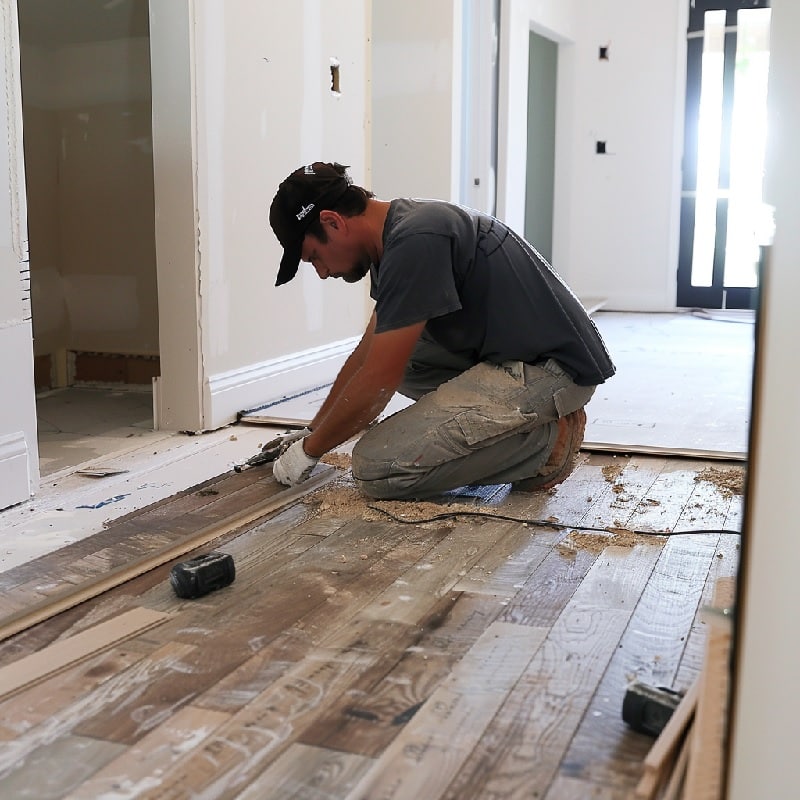
Once the job begins, the first hours are usually focused on layout, cuts, and making sure the starting lines are right. That part can look slow from the outside, but precision here affects the entire room. Boards need to be staggered thoughtfully, seams should look balanced, and transitions at walls or adjoining spaces have to be planned rather than improvised.
You should also expect some noise and a bit of disruption. Even with careful dust control and a tidy crew, installation is an active construction process. Professional teams will work in stages, keep materials organized, and watch the details that homeowners may not notice, such as expansion spacing around the perimeter. From subfloor prep to final trim, our team handles projects with in-house installers and dedicated oversight, which helps keep workmanship consistent from start to finish.
In older homes, surprises can appear once existing flooring comes up. Minor leveling issues, squeaks, or hidden damage underneath may need attention before the new surface can go down. That does not mean something has gone wrong. It means the crew is solving problems at the right moment instead of covering them up.
What to Expect Right After Installation
When the last board is in place, the project is not quite finished from the homeowner’s perspective. You may need to wait before moving heavy furniture back, especially if trim work, adhesive cure time, or final cleanup is still underway. The crew should walk you through what was completed, what to avoid for the next day or two, and how to protect the new surface during the settling-in period.
This is also when maintenance habits start to matter. Felt pads, entry mats, and the right cleaning routine go a long way toward preserving the finish. If you are still comparing surfaces for other rooms, browsing the hardwood collection can help you understand differences in species, tone, and finish before a future project begins.
Why the Process Feels Better When You Know the Plan
Most installation anxiety comes from uncertainty, not from the work itself. Once you understand the sequence, the experience becomes much easier to live with. You know why preparation matters, why the first rows take time, and why post-install guidance is worth following. Homeowners in Windsor and Cheyenne often find that the project feels far less disruptive when expectations are clear from the beginning. If you want to compare timelines across different materials, our full list of flooring services gives a helpful overview of other installation options as well.
A well-installed floor should look beautiful on day one, but it should also perform for years after the tools are packed up. That is the real goal. If you are ready to plan your project, request a free estimate and get clear guidance on the next steps.


